
A single outlet can carry two different ratings at once: a 4.3 on Zomato, a 3.9 on Swiggy, sometimes further apart than that. Nothing in the kitchen changed between the two apps. The food is the same, the staff are the same, the hours are the same. The number the diner sees is not.
The instinct is to treat the lower score as the problem and fix it, outlet by outlet. That is usually wrong, because the two platforms are not measuring the same experience. The gap is not a defect to close. It is a structural fact about how each app computes its number, and it has to be managed rather than chased.
Why the same kitchen gets two different scores
Start with the sample. Each platform only sees the orders placed through it, so a location that skews toward one app for lunch and the other for late-night delivery is effectively scored on two different order mixes, not the same business twice. Recency weighting differs as well: both platforms roll recent orders into the visible average, but not on the same schedule, so a rough week shows up faster on one app and clears faster on the other.
The biggest factor is what actually gets rated. A platform score is rarely food alone. It usually blends taste and portion with delivery experience: packaging, rider behaviour, whether the order arrived on time and complete. None of that sits inside the kitchen's control, and each platform runs its own fleet with its own standards. A kitchen can hold food quality perfectly steady and still watch its score move, because the variable that changed was never the food.
Chasing the lower number is the wrong move
Two mistakes follow from treating the lower platform score as the thing to fix. The first is diagnosing the wrong cause: reading "Swiggy is down 0.2" as a food problem and retraining kitchen staff produces no movement if the real driver was late deliveries on that platform's own logistics. The second is reacting to noise. An outlet doing forty orders a week on one platform and four hundred on the other will show a visibly noisier score on the low-volume side, where a single bad review can swing a small sample in a way it cannot swing the larger one. Treating every wobble on the thinner platform as a crisis burns attention on something that would have corrected itself.
The better question is not "why is one platform lower." It is whether the gap is widening, and whether the reviews behind it point at the kitchen or the delivery.
A weekly routine that keeps the gap from widening
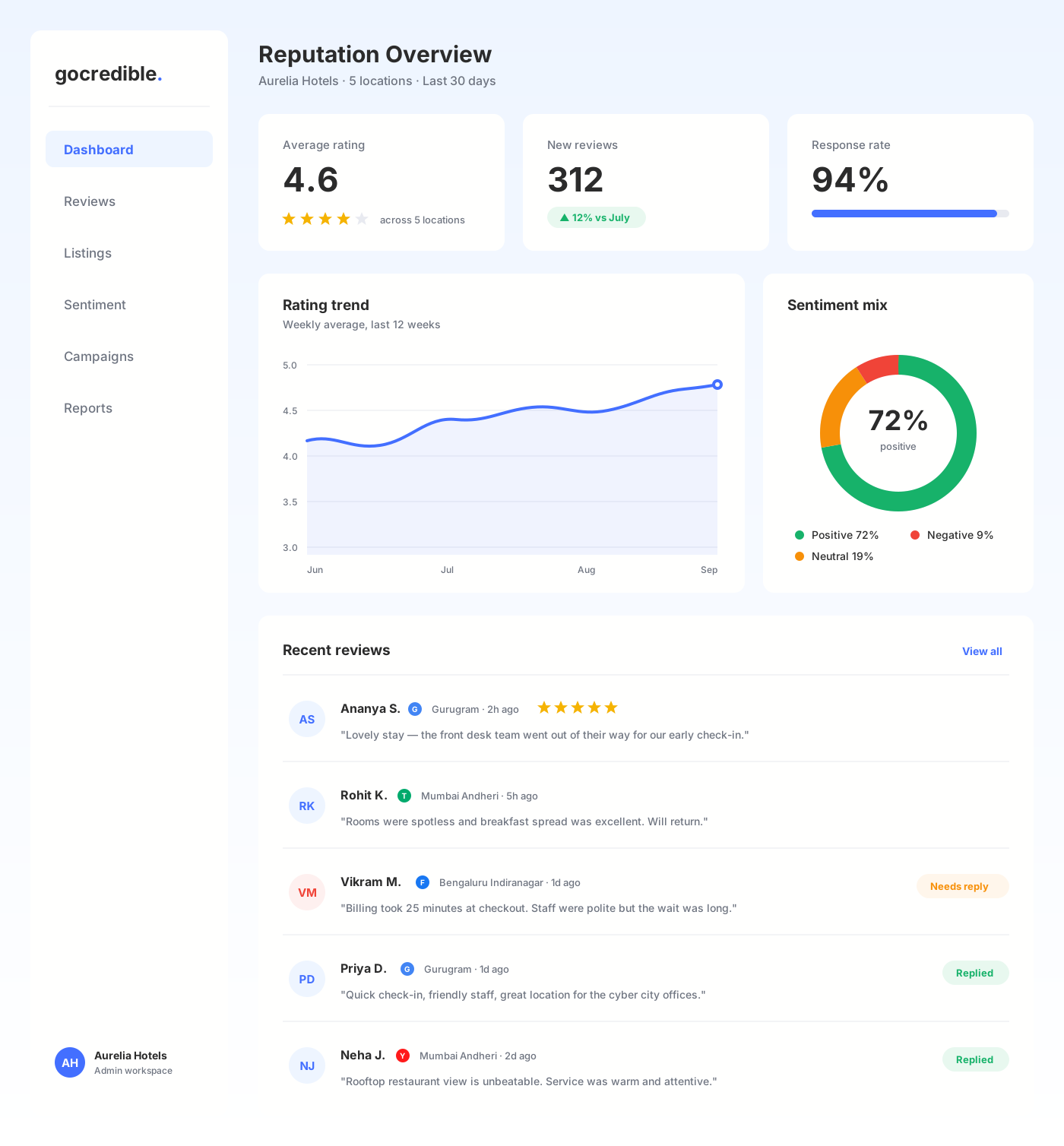
Treat the trend line on each platform as the signal, not the single score on any given day. A location moving from 4.4 to 4.3 to 4.2 over three consecutive weeks on one platform is telling you something real. A location that dips for one week and recovers the next is not.
Read the review text before the stars. Sort recent low ratings into two buckets: mentions of taste, temperature or portion, which point at the kitchen, and mentions of lateness, damaged packaging or missing items, which point at delivery. A gap that is almost entirely delivery-worded is a logistics conversation, not a menu one. Call it real only once it has held for two consecutive weeks and the complaint language clusters in one bucket rather than spreading thin. Everything short of that is more likely to be sample noise than a genuine shift.
What to do
Keep the scores and review text from every platform in one weekly view, so the comparison runs against the trend rather than a single screenshot. Run it as a Monday check, before anyone touches a menu or calls a platform's support line.
- Pull each platform's rating trend weekly, not the current score alone.
- Classify recent low reviews as kitchen-caused or delivery-caused before acting.
- Escalate delivery-caused patterns to the platform, not to kitchen staff.
- Only flag a gap as real once it holds for two weeks and clusters around one cause.
The two numbers will rarely converge, and they do not need to. What matters is catching the week a stable gap starts to widen, and knowing which side it came from.