
Most complaint threads never go anywhere. A guest posts something annoyed, three friends agree, and the post scrolls off the front page within a day. The mistake teams make is treating every angry post as a crisis, which wastes a week of anxious monitoring on nothing, or trains people to ignore the signal until the one time it matters.
The useful skill is not writing a better apology. It is telling a real spike from ordinary noise fast enough to act inside the window that decides how a thread ends: roughly the first hour.
Telling a spike from noise
Ordinary noise looks like one post, a handful of replies, and no growth over an hour of checking. A real spike looks different on three counts: replies still climbing on refresh, people outside the original poster's network commenting, and the thread being quoted or screenshotted elsewhere, another subreddit, a second platform, a group chat you only hear about secondhand. Any one alone is not much. Two together, in the same hour, is worth treating as real.
Checking this by hand does not scale past a handful of locations. A reputation risk alert that flags unusual volume, rather than every new post, is the version that survives a normal week where nothing is happening.
Why deleting or lawyering makes it worse
Two instincts feel protective and both backfire. The first is asking the platform or the poster to take the post down. On Reddit and X this is visible: people screenshot a post before it disappears, and "they tried to delete this" becomes the new headline, worse than the original complaint. The second is a legal or PR-reviewed statement that reads like it was written by nobody. Threads catch exactly this tone, and a reply that sounds drafted by committee gets quoted back as proof the company does not care.
What works is the opposite of both instincts: stay visible, and sound like one person, not a department.
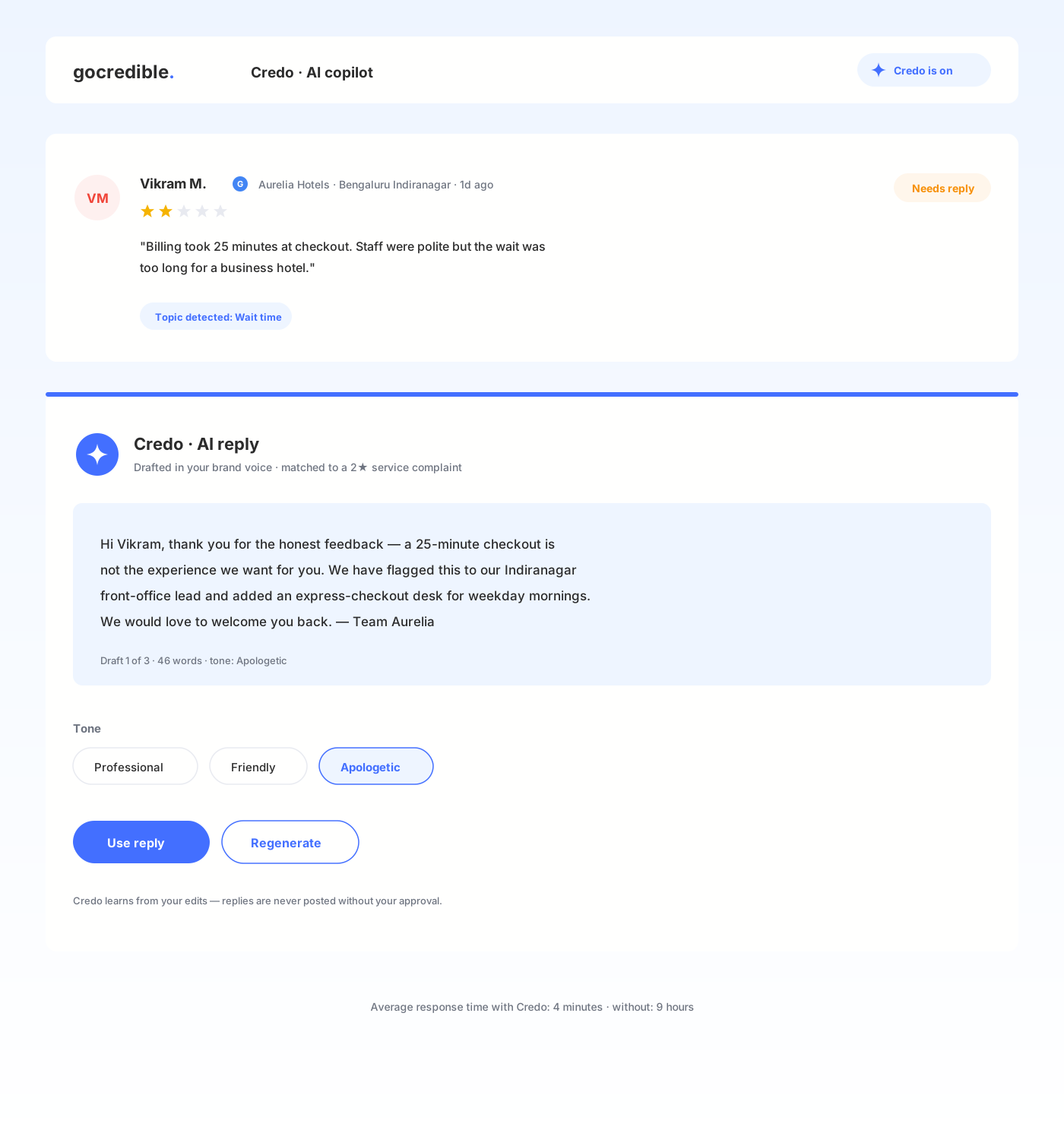
What the first reply needs
A first reply that calms a thread down has four parts, in order. It names the specific thing complained about, not a generic "we're sorry for your experience." It says, concretely, what is being done right now, not what will eventually be reviewed. It offers a route off the public thread, a direct message, an email, a phone number, so the detailed back-and-forth happens somewhere it is not being screenshotted line by line. And it is signed with an actual name, not "Team" or a logo. A named person can be held accountable, and is believed for the same reason.
What not to do is just as specific. Do not reply to every commenter individually; it reads as a company flooding a thread it is losing. Do not argue the facts in public, even when you can prove the poster wrong; fact-disputes rarely persuade anyone watching. And never have staff accounts posting supportive comments in the same thread. It gets noticed and named, and from that point the story is no longer the original complaint.
The follow-up, and the spillover after it
The first reply buys time. What closes a thread is a second update, roughly 24 to 48 hours later, once the issue has actually been looked at. Most threads never get this and fade unresolved, leaving the original complaint as the last visible word. A short, plain update, "we changed X, here's what we found," is usually enough to end it.
A viral complaint rarely stays on the platform it started on. People who saw the thread often check the business's Google or Tripadvisor rating out of curiosity, and a small number leave their own review referencing it, sometimes about an unrelated visit. This spillover typically peaks two to four days after the post and tapers over a week. Locations that stop watching once the thread goes quiet are usually the ones surprised by a rating dip they cannot explain later.
- Confirm a real spike: rising replies, spread beyond the original network, cross-platform mentions.
- Do not delete or lawyer it. Reply publicly, once, with a named person.
- Acknowledge the complaint, state the action, offer an off-platform route, sign it.
- Follow up 24 to 48 hours later with a real update.
- Watch review platforms for spillover for a full week.