
A one-star review is a problem you can see. It sits on the page, names what went wrong, and gives you something to respond to. Wrong opening hours do none of that. A customer who arrives at an outlet and finds it shut, twenty minutes before the listing said it would close, does not write a review about it. They just do not come back, and they do not tell you why.
That is what makes listing accuracy harder to manage than reviews, not easier. A dead phone number, a wrong address pin, or a holiday closure nobody updated is silent: it shows up nowhere in your dashboards, only in footfall that never arrives. Across a chain, that silence multiplies, because every outlet is a separate listing that can drift on its own.
Where the drift comes from
In a single-location business, one person controls the listing and it stays roughly accurate. A chain has no such owner by default, and the drift tends to come from four places: outlet managers editing hours locally and forgetting to revert them after a quiet season; platforms accepting a user-submitted correction without checking it against you; an aggregator feed that several directories pull from instead of your own data, one nobody at your company has ever logged into; and holiday hours that nobody sets, because the outlet assumes head office has it covered and head office assumes the outlet does.
The five fields worth auditing
Star ratings get the attention because they are visible and emotional. The fields below decide whether a visit or a call happens at all, and are worth checking outlet by outlet.
- Opening hours, specifically today's, not just the weekly pattern. A "closes at" time is often left over from a schedule edited once and never touched again.
- Phone number. A wrong number fails silently: the caller does not know it is wrong, they just assume nobody picked up.
- Address and map pin. A pin dropped one street over sends a walking customer the wrong way, and a driving customer somewhere else.
- Website or ordering link. A stale link to a discontinued page costs a conversion at the moment someone was ready to act.
- Category and attributes, such as dine-in versus takeaway-only or wheelchair access, which decide whether a search surfaces the outlet at all.
Running the audit at chain scale
Checking one outlet on one platform takes a few minutes: open the listing, compare it against a source-of-truth document, note the mismatches. That arithmetic breaks at real numbers. A forty-outlet chain on five platforms is two hundred individual pages to open, and doing it by hand, quarterly, is the kind of task that gets skipped the first time anyone is busy, which is most quarters.
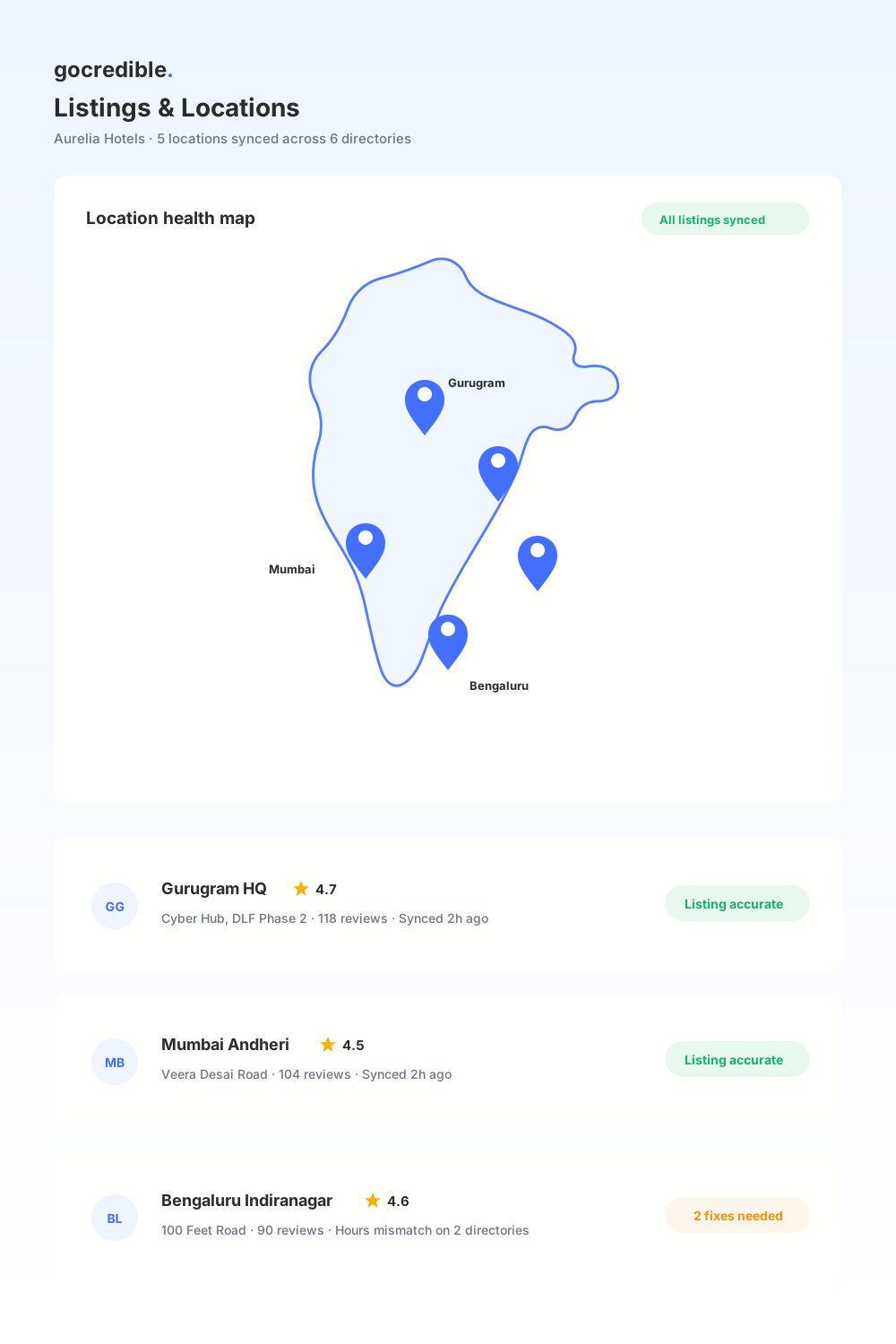
The fix is the same one that works for review response: stop treating each outlet and platform as a separate task, and treat the whole set as one list. Pull the current published value for each of the five fields, for every outlet, on every platform, into one view next to what it should be. Two hundred page loads becomes one table with mismatches highlighted, and the audit turns into scanning for red flags rather than comparing fields from memory.

A cadence that stops it drifting back
An audit is a snapshot. The moment it is done, drift resumes, because the same four sources are still active. A single clean-up a year finds problems that have already been costing footfall for months. What holds is a cadence with an owner attached, the same way review response needs a named owner per location rather than a shared inbox nobody feels responsible for.
- Full five-field sweep, every outlet, every platform, once a quarter.
- A dedicated hours check two weeks before any major holiday, early enough to fix mistakes before the date itself.
- A lighter monthly pass on phone number and address, the two fields that fail silently and permanently once wrong.
- One named owner per outlet, accountable for that outlet's listings, not a shared responsibility.
- A single source-of-truth document per outlet that every correction is checked against.
None of this needs a bad quarter to justify it. The cost of wrong hours never appears as a complaint, which is exactly why it is worth auditing on a schedule rather than waiting to be told.